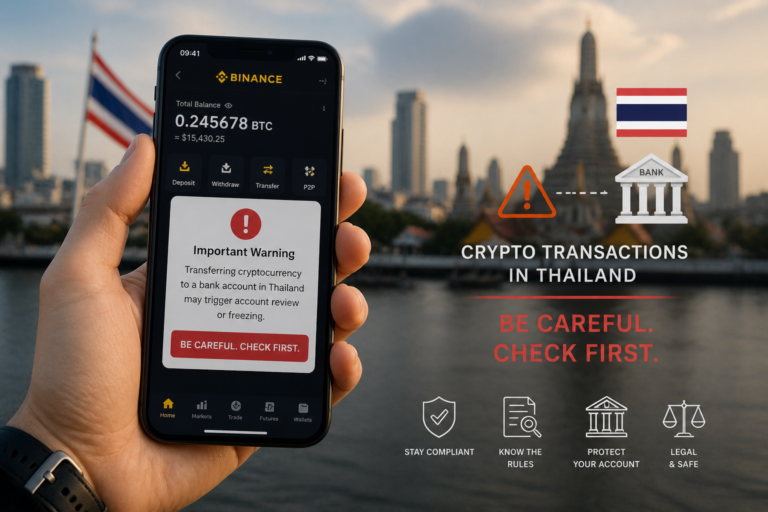
Cashed Out Crypto for Friends in Thailand — and Ended Up in Custody
Crypto & P2P Mike Boldyrev6 min read
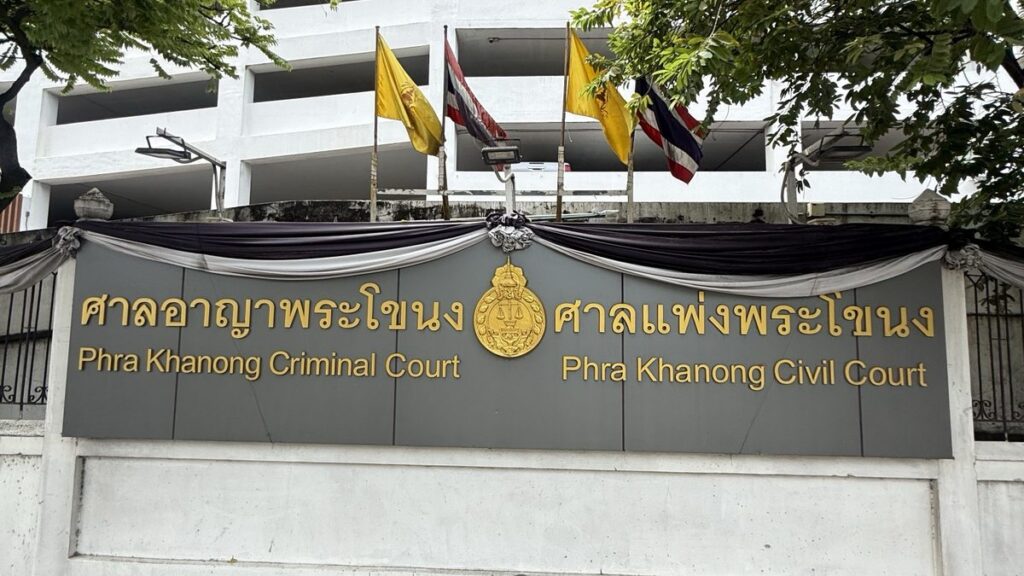
It usually starts with a favour. Someone you know asks you to receive money, push it through Bitkub and hand it back in cash for a small percentage. A few weeks later it turns out the money came from a scam victim. The police cannot see the organisers, but they can see your name in the bank and exchange records.
Below: a real case our team worked on this autumn, how these chains work, why the person in the middle becomes the suspect, what happens if you miss a police summons, five rules for anyone who trades P2P, and who does what if it has already happened.
In short
- “Just help with an exchange” is the classic way to become a money mule. The organisers stay hidden, the account is in your name.
- Letting other people’s money pass through your account is a crime in Thailand. Up to 3 years in prison and a fine of up to 300,000 THB, even if you did not know the money was stolen.
- Ignoring police letters turns a request for a statement into an arrest warrant. Many people are stopped at the airport when they try to leave.
- Act at the first sign: a frozen account, a call from the bank or a letter from the police.
A real case from this autumn
A foreigner who had lived in Thailand for several years was asked by acquaintances to receive some money on his Bitkub account, withdraw it and hand them the cash for a percentage. He did it. Later it turned out that the money in this chain had been stolen from scam victims.
The police sent two letters to his registered address. He never saw them, because he was travelling around Thailand. A warrant followed, and when he tried to fly out of the country, he was detained at the airport. A few days later a court in Bangkok refused bail and allowed pre-trial detention while the investigation continues.
His friend contacted us the evening before the hearing. The next morning our interpreter was in court: interpreting at the hearing and in the talks with the Thai lawyer, and explaining to the family what the court had decided and what happens next. The case is still open, so we share it without names or details.
Two things made this case much worse: the letters went unanswered, and he tried to leave the country without checking whether there was a case against him.
How it happens
- Someone you know asks you to receive a transfer “for a friend who cannot use his own account”.
- You get baht into your account, buy USDT on Bitkub and send it on, or you receive crypto, sell it and hand over the cash.
- You keep a few percent for yourself.
- The money in the chain came from a scam victim. The victim files a complaint, and the transfer leads straight to your account, verified with your passport (KYC).
The organisers are often hard for the police to reach. The person whose name is on the account is not.
Why this is no longer rare
Since 2023, a Thai emergency decree on technology crime makes it an offence to let other people’s money pass through your account. The penalty is up to 3 years in prison and a fine of up to 300,000 THB. Banks now share data on suspicious accounts, and the police arrest hundreds of money mules across the country. “I was just helping a friend” does not close the case. It only becomes part of your statement.
We regularly see milder versions of the same story: a person exchanged crypto for a friend and found three police cases on one account; a woman let an acquaintance who traded crypto receive a payment on her account and had it frozen for more than two years; a student sold baht to a stranger on P2P and got a case in another province. Why Thai banks freeze accounts after P2P trades
What happens next
- The account is frozen after the victim’s complaint, often before you hear anything from the police.
- Summons letters go to your registered address. If you travel or have moved, you may never see them.
- After missed summonses, the police can get an arrest warrant. Immigration can see it, and many people are detained at the airport on departure.
- After an arrest, a court decides on detention during the investigation. Each order is for up to 12 days. In total this can reach 48 days for offences like mule accounts and 84 days for serious charges such as money laundering. Bail is possible but not guaranteed, and a foreigner usually has to hand over the passport.
5 rules for anyone who trades P2P
- Never receive money “for someone else”. Not for friends, not for a percentage, not even once.
- Do not ignore police letters or calls. Keep an eye on your registered address and answer every summons.
- Keep your trade history and chats. Order numbers, wallet addresses, TXIDs and screenshots of every deal.
- Got a summons? Go to a lawyer first, not to the airport. A lawyer can check for a warrant and arrange your statement.
- Account frozen? Act the same day. Find out who placed the hold before the case grows.
Who does what
- A licensed Thai lawyer defends you in the criminal case: your statement as a suspect, bail and court.
- Our team interprets, talks to the investigator and the bank, collects your trade history, explains what is going on and handles the account unfreeze. We are not a law firm and bring in a lawyer when the case needs one.
Money from crypto on a Thai account is not illegal in itself. Crypto money and Thai bank accounts
How we can help
Case Review & Strategy, 12,900 THB: a written analysis of your situation and next steps. Case Status Check, 2,990 THB: we contact the police and tell you what is frozen and who handles the case. Account unfreeze from 26,900 THB; cases with a police hold usually start at 74,900 THB. All prices include 7% VAT. Lawyer fees are confirmed separately. Unblock a Thai bank account
Questions we often hear
Is P2P trading illegal in Thailand?
No. But letting other people’s money pass through your account is, and P2P is one of the main channels for moving stolen money.
I did not know the money was stolen. Am I safe?
Not automatically. Good faith matters, but you need records to prove it. Keep every trade.
How long can a person be held before trial?
During the investigation, the court approves detention in periods of up to 12 days. For serious charges the total can reach 84 days. This is not a verdict: the case continues, with or without detention.
The police sent a letter while I was abroad. What should I do?
Do not fly into or out of Thailand until a lawyer has checked for a warrant and arranged your statement. Called to court in Thailand
Can you unfreeze my account?
Often yes, once the police case is resolved. We cannot promise a result. Account blocked by the cyber police
Do I need a lawyer, or is an interpreter enough?
If you are a suspect in a criminal case, you need a licensed Thai lawyer. An interpreter helps you understand every document and every conversation, but does not defend you.
This article is general information, not legal advice. For a criminal case, consult a licensed Thai lawyer.
Police letter or frozen account after an exchange?
Tell us what happened. We usually reply the same business day and suggest the next steps.
Similar posts
 Frozen bank accountsThai SIM Card Not in Your Name? Why Your Bank App Gets Suspended20.11.2026
 Frozen bank accountsThe Bank Says Call 1441, 1441 Says Call the Bank: How to Get Out of the Loop13.11.2026
 Police & cyber policePolice Hold on a Thai Bank Account: How the Release Letter Works, Step by Step08.10.2026

Need help with a bank, visa or business issue?
Tell us what happened, which bank or office is involved and what you need. After a first check, we confirm the scope, the fee and the expected timeline in writing before you pay.
Start your case ↗