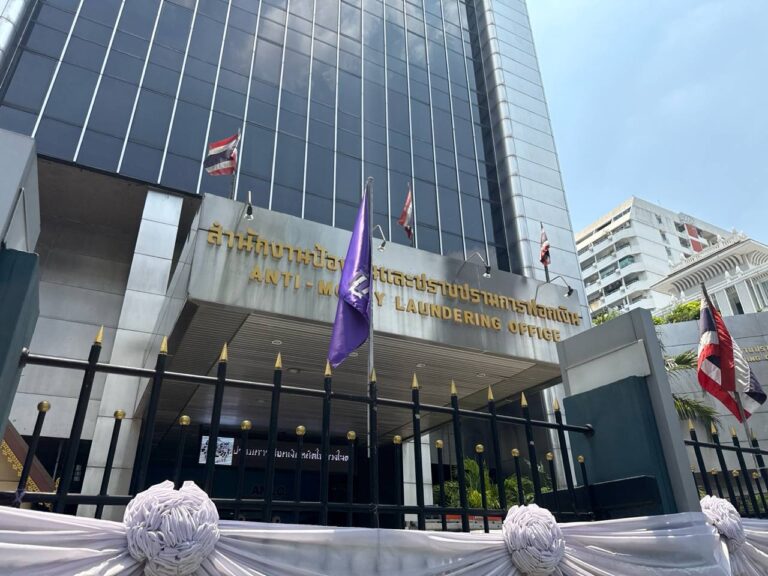
Crypto Scams in Thailand: How to Spot Them and What to Do If You Lost Money
Crypto & P2P Mike Boldyrev6 min read
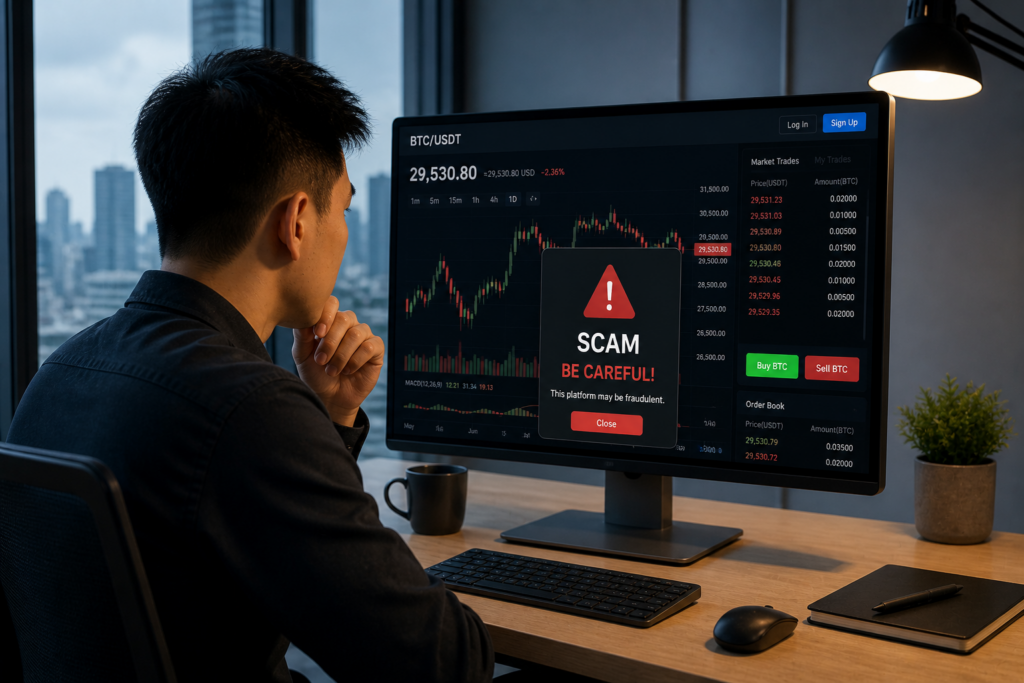
A new investment platform shows great profits, a friendly contact on WhatsApp helps you with every step, and then the withdrawal never comes. Or a P2P buyer pays you, and a week later your Thai bank account is frozen because the money came from a scam victim.
Below are the crypto scams foreigners meet most often in Thailand, the warning signs, how to check a platform, and what to do in the first hours if you already sent money.
In short
- Most common scams: fake investment platforms, online “friends” who teach you to invest, fake support or fake police, and P2P payments made with stolen money.
- Main warning sign: a promised fixed or fast profit, or a fee you must pay before you can withdraw.
- Check first: use only exchanges licensed by the Thai SEC. The list is on the SEC website and in the SEC Check First app.
- If it already happened: act within hours. Call 1441, save everything and file a police report.
The crypto scams foreigners meet most often in Thailand
- Fake investment platforms. A professional-looking site or app shows your balance growing. Small withdrawals may work at first, then a large one is blocked until you pay a tax, a fee or a deposit. The money does not come back.
- The online friend who invests. Someone you met on a dating app, Facebook or Telegram shares their trading results for weeks and then invites you to the same platform. This scheme is known as pig butchering.
- Fake support and fake police. Calls or messages from exchange support, a bank or the police that ask you to move your coins to a safe wallet or to pay to unfreeze an account. Real exchanges, banks and police do not ask for this.
- P2P payments with stolen money. A buyer pays you in baht from someone else’s account, often a scam victim’s. You release the crypto, the victim reports to the police, and your account is frozen as the account that received the money. Why P2P trades lead to frozen accounts
- Renting out your account. Someone offers to pay you for receiving payments into your Thai account. Opening or lending an account for someone else’s use is a criminal offence in Thailand, and the account owner is the first person the police contact.
Warning signs
- A guaranteed, fixed or risk-free profit
- Pressure to decide today, or a bonus that ends in an hour
- A fee, tax or deposit you must pay before you can withdraw
- A platform that is not on the Thai SEC list and has no real company behind it
- Contact only through WhatsApp, Telegram or LINE, and the person avoids video calls
- A P2P buyer whose bank account name is different from the name on the exchange
How to check a platform before you send money
- Check the licence. Look for the company on the Thai SEC list of licensed digital asset operators, on the SEC website or in the SEC Check First app. Since June 2025 Thailand has blocked several unlicensed foreign platforms, including Bybit and CoinEx.
- Check the website address. Type the address yourself and do not follow links from chats or ads. Scam sites copy the design of real exchanges.
- Never pay to withdraw. A real exchange takes its fee from the amount you withdraw. A request to send more money so you can get your money out is always a scam.
- Keep everything. Screenshots of chats, transaction IDs, wallet addresses and bank transfers. You will need them for the bank and the police.
If you already sent money
The first hours matter most, because scammers move the money through several accounts very quickly.
- Call 1441. This is the hotline of the Anti Online Scam Operation Center. It works 24 hours a day and can have the accounts that received your money suspended.
- Tell your bank. Call your bank’s hotline and ask whether the transfer can still be stopped.
- File a police report. Online on the Thai Police Online website or at a police station, with your passport, transfer slips and screenshots. How to file a police report
- Do not pay recovery services. After a scam, people often get messages from lawyers or hackers who promise to get the money back for a fee. This is the second scam.
Be realistic about the result. Money that has already left Thailand or been turned into crypto is rarely recovered. A fast report gives the best chance, but no one can guarantee it.
If your account was frozen because of someone else’s scam
Sometimes you are not the victim but the account that received the victim’s money: after a P2P trade, an exchange for a friend, or a payment you accepted for someone. The victim reports to the police, and the police order the bank to hold your account. To release it, you need to show the officer where the money came from and that you did not take part in the scam. How the release letter works
A real case
A client on a DTV visa exchanged crypto for a friend. The sender’s name did not match the P2P buyer, and his account with about 150,000 THB was frozen. Through the 1441 hotline and the cyber police we found two more cases on the same account. After three working days with the police, all holds were lifted, and the bank released the money and even kept the account open. Read the full story
How we can help
If you sent money to a scam, we help you file the report correctly in Thai and follow up with the officer. If your account was frozen because of a scam payment, we find out which station placed the hold, prepare the explanation and documents in Thai, and go with you to the police and the bank. We cannot get back money that scammers have already moved, and we do not promise the result.
Help with a police hold starts at 26,900 THB, including 7% VAT. Prices and timelines
Questions we often hear
Is crypto trading legal in Thailand?
Yes, through exchanges licensed by the Thai SEC. Unlicensed foreign platforms are not protected under Thai law, and some of them are blocked.
Can the police get my crypto back?
Sometimes, if the money is still in a Thai bank account or on an exchange that cooperates. Once it has moved to private wallets abroad, it is very hard. A report within hours gives the best chance.
Someone offers to pay me for using my bank account. Is that OK?
No. Opening or lending a bank account for someone else’s use is a criminal offence in Thailand, and the account owner is the first person the police contact.
This article is general information, not legal advice. Rules on digital assets in Thailand change, so check the Thai SEC website for the current list of licensed operators.
Lost money to a crypto scam, or was your account frozen?
Tell us what happened, which bank and the dates. We usually reply the same business day with an honest assessment.
Similar posts
 Police & cyber policePolice Hold on a Thai Bank Account: How the Release Letter Works, Step by Step08.10.2026
 Frozen bank accountsHow Much Does It Cost to Unfreeze a Thai Bank Account? Fees, Timelines and What’s Included08.10.2026
 Frozen bank accountsInterpreter at a Thai Bank: KYC Interviews, Frozen Accounts and Account Opening25.09.2026

Need help with a bank, visa or business issue?
Tell us what happened, which bank or office is involved and what you need. After a first check, we confirm the scope, the fee and the expected timeline in writing before you pay.
Start your case ↗